Real-time information is no longer a luxury in the digital age — it is an expectation. People want to know where their deliveries are, how vehicles are moving, whether devices are secure, and when important assets will arrive. This is exactly where live tracker technology has become indispensable. By turning location and movement data into instant insights, live tracker systems help individuals and businesses stay informed, respond faster, and operate with greater confidence.
What makes this technology so powerful is its ability to remove uncertainty. Instead of waiting for updates or relying on rough estimates, users can monitor activity as it happens. That immediate visibility improves safety, strengthens planning, enhances customer experience, and supports smarter decisions across both personal and professional environments.
What Is Live Tracker Technology?
Live tracker technology refers to systems that provide real-time or near real-time updates about the location, movement, or status of a person, vehicle, device, or asset. These systems typically combine GPS positioning, mobile connectivity, internet-based data transfer, cloud processing, and user-facing software to display live information through maps, dashboards, or mobile apps.
In simple terms, a live tracker works by:
- Detecting location through GPS or network signals
- Sending that information through a mobile or internet connection
- Processing the data on cloud-based systems
- Displaying the result instantly to the user
The result is continuous visibility into movement and status, making live tracker systems highly valuable for logistics, transport, personal safety, fleet operations, and digital monitoring.
Why Live Tracking Matters More Than Ever
Modern life moves quickly, and people increasingly depend on instant updates to manage time, reduce uncertainty, and make decisions with confidence. Live tracking meets that need by providing real-time awareness exactly when it matters most.
The importance of live tracker technology continues to grow because it delivers clear benefits:
Greater Safety
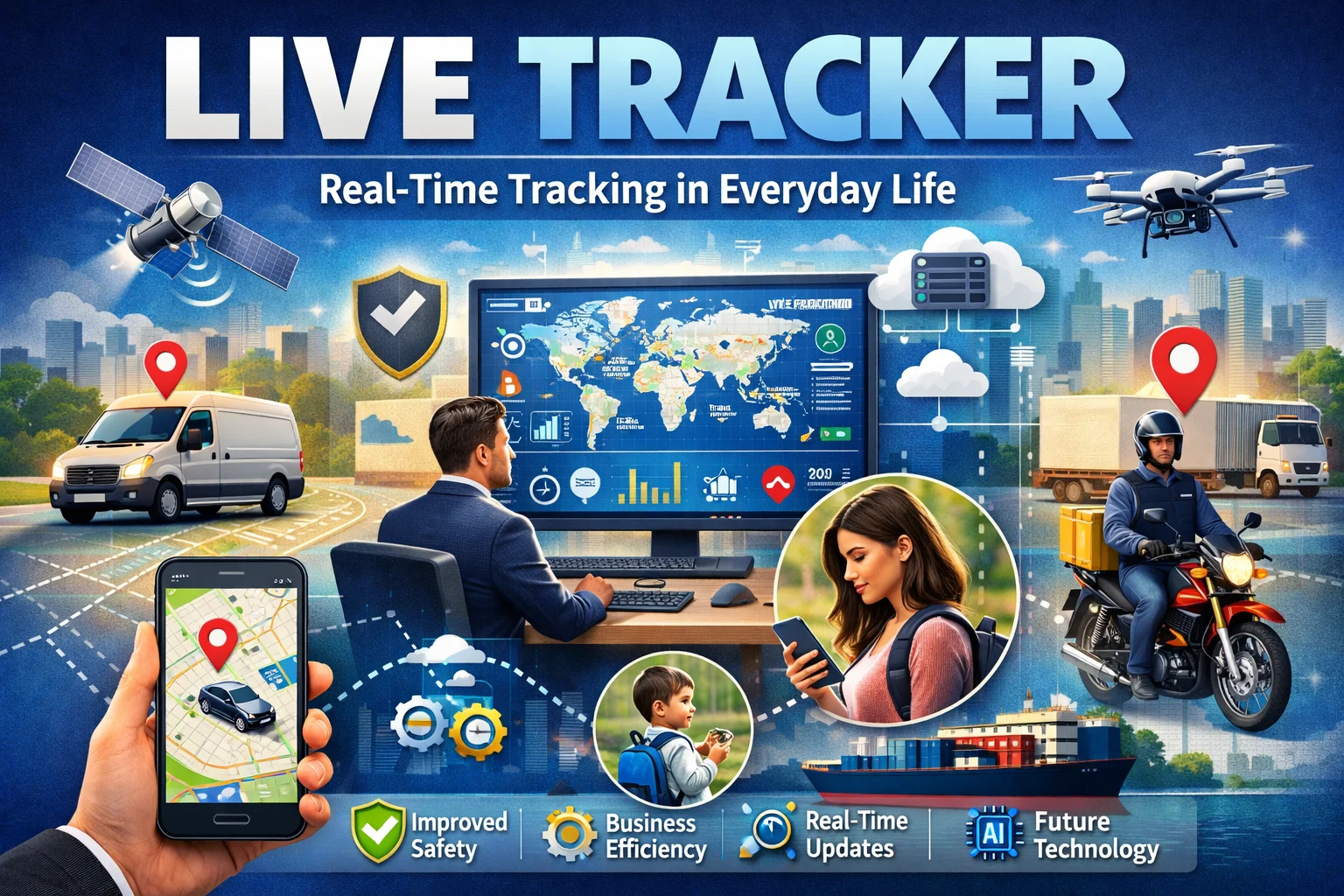
Parents can monitor school travel, businesses can oversee driver movement, and individuals can stay informed about devices or personal travel in real time.
Better Efficiency
Organizations use live tracking to improve delivery operations, reduce delays, optimize routes, and coordinate mobile teams more effectively.
Stronger Transparency
Customers feel more confident when they can track shipments, vehicles, or service progress live instead of relying on vague arrival windows.
Faster Decision-Making
Real-time updates make it easier to react to route changes, delays, unexpected stops, or changes in movement without wasting time.
At its core, live tracker technology replaces guesswork with visibility — and visibility leads to better outcomes.
How Live Tracker Systems Are Used in Everyday Life
One reason live tracker technology has become so important is that it applies to real-world situations people face every day. It is no longer limited to specialized industries. It now supports ordinary routines, digital services, and everyday mobility.
Delivery and Order Tracking
Consumers expect to follow deliveries in real time, from dispatch to doorstep. Live tracking helps reduce uncertainty and improves the customer experience.
Vehicle and Fleet Monitoring
Businesses use live tracker systems to monitor cars, trucks, and commercial vehicles. This helps with route management, driver oversight, and operational planning.
Personal Safety and Family Monitoring
Location sharing and travel monitoring tools help families stay informed and add peace of mind during school travel, commuting, or unfamiliar journeys.
Device and Asset Tracking
Live tracker tools are also used to monitor valuable devices and assets, helping users stay aware of movement and respond quickly if anything changes.
Field Team Coordination
Companies with mobile staff, technicians, or service teams rely on live tracking to improve scheduling, task management, and route visibility.
The Core Technologies Behind Live Tracking
The strength of any live tracker system depends on the technologies working behind the scenes. While users may only see a moving icon on a map, the actual process is powered by multiple connected systems.
GPS Positioning
GPS satellites provide precise location data by communicating with smartphones, vehicles, and tracking devices.
Mobile Networks and Internet Connectivity
Cellular networks and internet connections allow location data to be transmitted instantly from the device to the tracking platform.
Cloud Infrastructure
Cloud systems store, process, and organize tracking data so it can be accessed in real time from anywhere.
Smart Interfaces
Apps, dashboards, and map-based tools present the data in a simple, useful format for the user.
Together, these technologies make modern live tracker platforms fast, scalable, and reliable.
Why Businesses Depend on Live Tracker Technology
For businesses, live tracking is not just a useful feature — it is a strategic advantage. Real-time visibility helps companies improve efficiency, reduce costs, and deliver a more reliable service.
Organizations use live tracker systems to:
- Track deliveries and service vehicles
- Monitor route efficiency
- Manage mobile workforces
- Improve customer communication
- Reduce operational delays
- Increase overall transparency
In industries like logistics, transport, field services, and e-commerce, real-time tracking has become a critical part of daily operations. Businesses that can see movement clearly can respond faster, plan better, and serve customers more effectively.
Live Tracker Solutions and Digital Workflow Support
As live tracker technology becomes more integrated into business and digital operations, supporting tools also play an important role. Tracking dashboards, maps, and visual data often need to be displayed properly across different devices, screen sizes, and interfaces.
In these situations, tools for resizing can help optimize visuals, improve dashboard presentation, and maintain consistency across platforms. This is especially useful when businesses need to present tracking maps, route visuals, or digital assets clearly without affecting quality or usability.
The same applies to digital documentation workflows and online systems that rely on adaptable visual formatting. When tracking-related interfaces or supporting visuals need to remain responsive and clean, trusted tools for resizing can support better display performance and user experience.
The Future of Live Tracker Technology
The future of live tracker technology is moving well beyond basic location updates. New developments in artificial intelligence, predictive analytics, machine learning, and the Internet of Things are making real-time tracking smarter, faster, and more responsive.
In the years ahead, live tracker systems are expected to offer:
Predictive Tracking
Instead of only showing current location, future systems will estimate where a person, vehicle, or asset is heading based on movement patterns and route behavior.
Smarter Alerts
Tracking platforms will become more proactive, automatically detecting unusual movement or route deviations and sending alerts immediately.
Stronger IoT Integration
Connected devices, wearables, smart vehicles, and industrial sensors will create a broader ecosystem of real-time tracking and visibility.
Better Accuracy With Lower Power Use
Technological improvements will continue increasing precision while reducing battery drain and improving efficiency.
This evolution means live tracking will become even more valuable in industries where timing, movement, and coordination are essential.
Why Live Tracker Technology Builds Topical Relevance in the Digital World
Live tracker technology sits at the intersection of several growing digital trends: mobility, connected devices, logistics, safety, automation, and real-time data systems. That is why it is such a strong topic for modern digital content and industry relevance.
It naturally connects with related areas such as:
- GPS technology
- fleet management
- delivery tracking
- route optimization
- real-time monitoring
- device location services
- cloud-based tracking platforms
- digital safety tools
- data-driven decision-making
Because of this broad relevance, content built around live tracker technology can support stronger topical authority when written with depth, clarity, and real-world value.
Final Thoughts
Live tracker technology has fundamentally changed how people interact with movement, timing, and information. It gives users real-time visibility, helps businesses improve efficiency, supports safer decisions, and creates a more transparent digital experience.
Whether it is used for deliveries, vehicles, devices, field operations, or everyday safety, live tracking brings together speed, control, and reliability in a way that modern users now expect.
As digital ecosystems continue to evolve, live tracker technology will only become more intelligent, more integrated, and more essential. It is no longer just a useful feature — it is a core part of how people manage life and business in real time.
For The Future of Live Tracker Technology: How Real-Time Location Tools Are Reshaping Digital Security
For How Live Tracking Helps People Stay Organized, Connected, and In Control
 LIVE TRACKER