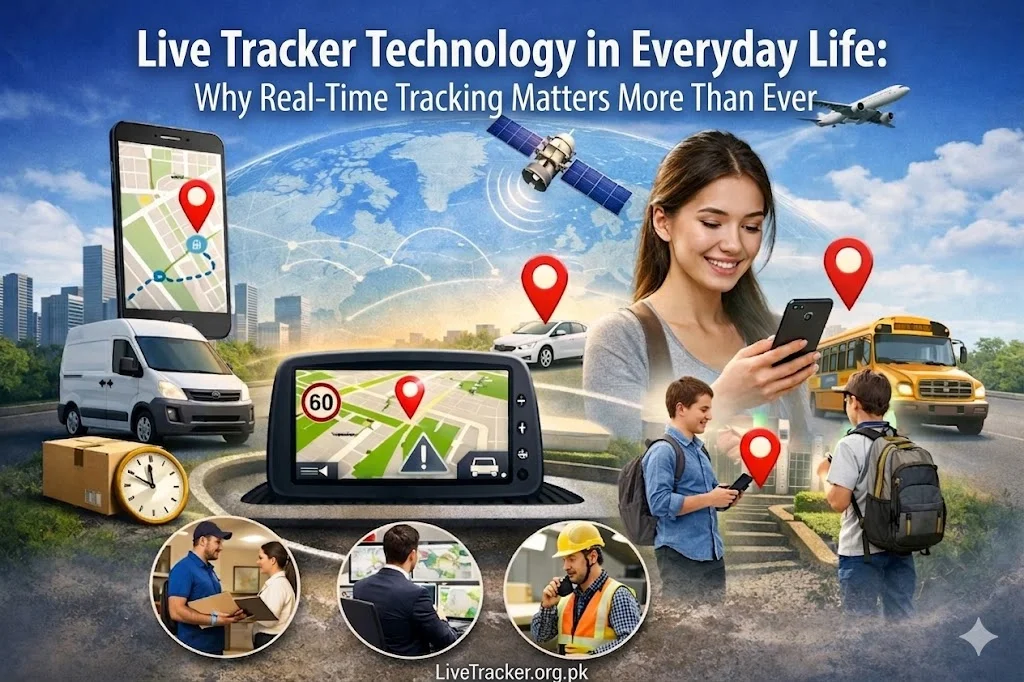
Live tracker technology has become a core part of modern life. People use it every day to monitor deliveries, follow vehicle movement, track devices, and stay updated on assets in real time. What once felt like an advanced feature is now a practical necessity. Instead of waiting for updates or relying on estimates, users can now see where something is the moment its location changes.
That real-time visibility is what makes live tracking so valuable. It reduces uncertainty, improves planning, and gives both businesses and individuals greater confidence in situations where time, movement, and accuracy matter.
What Is Live Tracker Technology?
Live tracker technology refers to systems that provide real-time or near real-time location updates for a moving object, vehicle, device, or asset. These systems typically use a combination of GPS, mobile networks, software platforms, and cloud-based communication tools to collect and send location data instantly.
In simple terms, the process works like this:
- A tracking-enabled device detects its location
- The device sends that data through a network
- The location appears on an app, map, or dashboard
- The user can monitor movement as it happens
This gives users continuous visibility instead of delayed updates. Whether the goal is tracking a shipment, monitoring a vehicle, or managing field operations, live tracker systems make information instantly accessible.
Why Live Trackers Are So Important Today
In a fast-moving world, people expect timely information. They want to know where their delivery is, how close a vehicle is, whether a route has changed, or if an important item is still moving as expected. Live trackers meet that need by turning location data into immediate, usable insight.
The biggest reason live tracking matters is simple: it replaces guesswork with certainty.
Instead of asking:
- Where is the delivery now?
- Has the vehicle reached the destination?
- Is the route on schedule?
- Has the device moved?
A live tracker or sim owner details provides direct answers in real time.
This level of visibility helps users make better decisions, react faster to delays, and stay informed without depending on repeated manual updates.
How Live Tracking Improves Daily Life
Live tracker technology is useful because it fits naturally into real-world situations where movement matters. It supports both convenience and control, making everyday processes more efficient and predictable.
1. Delivery Tracking
Customers want to follow an order from dispatch to arrival. Real-time tracking improves the delivery experience by showing progress, estimated arrival timing, and route movement.
2. Vehicle Monitoring
Businesses and individuals use live trackers to monitor cars, transport vehicles, and moving fleets. This improves route awareness, operational control, and movement visibility.
3. Field Team Coordination
Companies with mobile teams can track where employees are working, how routes are progressing, and whether schedules are being followed efficiently.
4. Family and Safety Use Cases
Live trackers can help users stay informed about school transport, travel movement, or the location of important personal assets.
5. Device and Asset Tracking
When a valuable device or mobile asset is in motion, real-time tracking makes it easier to monitor, manage, and respond quickly if something changes.
The Core Benefits of Live Tracker Technology
Live tracking is growing because it solves real problems. It gives users immediate access to the information they need, exactly when they need it.
Real-Time Visibility
Users no longer need to wait for status updates. They can see movement as it happens.
Better Planning
Knowing the exact location of a vehicle, package, or asset helps users organize time more effectively.
Faster Decisions
Real-time data allows people and businesses to respond immediately to delays, route changes, or unexpected movement.
Higher Transparency
Live updates create trust by giving users a clear view of current status and progress.
Reduced Uncertainty
When location data is available instantly, stress and confusion are significantly reduced.
These benefits are why live trackers are no longer seen as optional tools. In many environments, they have become essential.
Why Businesses Depend on Live Tracking
For businesses, live tracking is more than a convenience feature. It is a performance tool. Companies that manage deliveries, transport, service teams, or mobile operations need accurate movement data to stay efficient and competitive.
Live tracker systems help businesses:
- Monitor transport activity in real time
- Improve route management
- Increase operational visibility
- Coordinate field staff more effectively
- Strengthen service reliability
- Improve customer communication
When businesses know where vehicles, teams, or assets are at any moment, they can reduce delays, improve service quality, and maintain better control over operations.
How Live Tracking Builds Trust
One of the most overlooked benefits of live tracker technology is trust. People feel more confident when they can see what is happening rather than wait without information.
For customers, this means less frustration and more confidence in delivery timelines.
For businesses, it means stronger credibility and a better service experience.
For families and individual users, it means peace of mind.
Trust grows when information is visible, accurate, and timely. That is one of the main reasons live tracking continues to gain importance across industries.
The Role of Supporting Digital Tools
As live tracking becomes more common, users are also relying on other digital tools to complete online tasks more efficiently. For example, when uploading identity documents or submitting forms online, file size and format requirements can sometimes create problems. In such cases, utilities like a resizer pan card tool can help users adjust document dimensions properly before submission.
This reflects a broader trend: people increasingly value digital tools that remove friction, save time, and make online processes easier.
Where Live Tracker Technology Is Used Most
Live tracker systems are now widely used across many sectors because movement-based visibility is valuable almost everywhere.
Common use cases include:
- Logistics and courier services
- Delivery operations
- Transport and fleet management
- Ride movement tracking
- Field service coordination
- Personal device monitoring
- Asset tracking
- Safety-focused transport monitoring
As more services become mobile, connected, and time-sensitive, live tracking will continue to expand in relevance.
Why Live Tracking Will Continue to Grow
The demand for real-time information is increasing across every digital industry. Users no longer want delayed updates. They want live visibility. They expect to know where things are, how fast they are moving, and when they are likely to arrive.
That expectation is what makes live tracker technology future-proof.
As connectivity improves and digital systems become more integrated, live tracking will play an even larger role in business operations, customer experiences, and personal convenience. It is not just a trend. It is a foundational part of how modern systems deliver visibility and control.
For PTA SIM Check Code Pakistan 2026 — Every Official Code, Every Network, Complete Guide
For The Future of Live Tracker Technology: How Real-Time Location Tools Are Reshaping Digital Security
Final Thoughts
Live tracker technology has changed the way people manage movement, timing, and information. It gives users real-time awareness, reduces uncertainty, improves coordination, and creates a stronger sense of reliability in both personal and professional settings.
From deliveries and transport to field operations and personal asset monitoring, live tracking has become one of the most practical technologies in everyday life.
As digital expectations continue to rise, live tracker systems will only become more important. They are no longer just helpful tools — they are essential solutions for a world that depends on real-time visibility.
 LIVE TRACKER