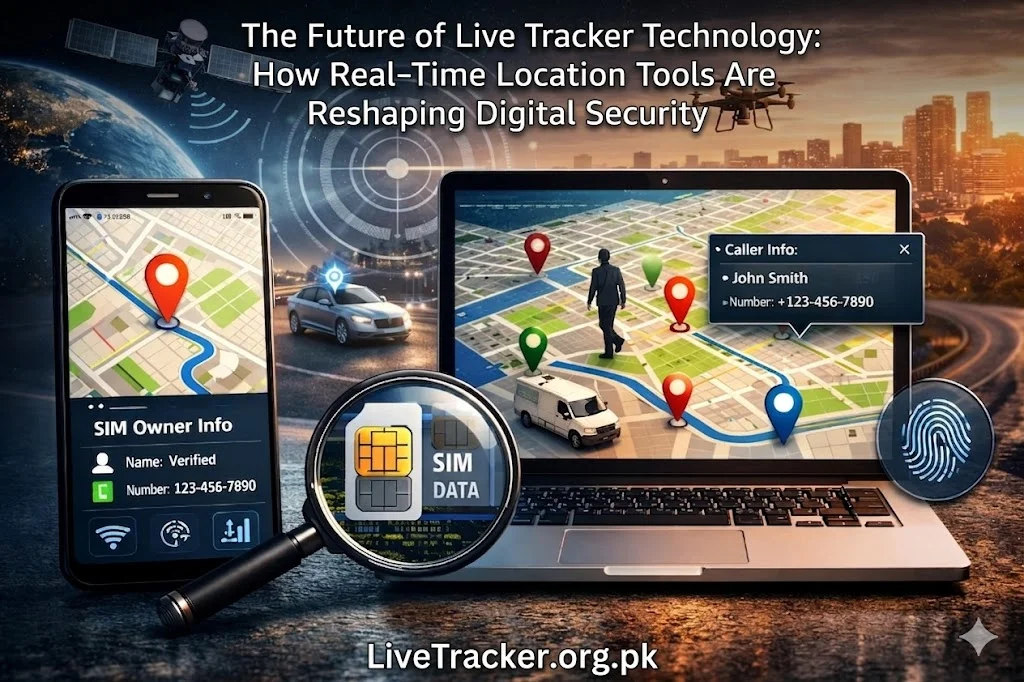
Live tracker technology is no longer just a convenience feature. It has become a central part of how people protect devices, monitor movement, verify digital activity, and improve real-time decision-making. In today’s connected world, users do not want delayed updates, vague estimates, or incomplete information. They want instant location visibility, accurate movement insights, and smarter tools that support both safety and control.
That is exactly why live tracker platforms are gaining importance across personal use, business operations, logistics, and digital security. What began as basic map-based tracking has evolved into a much broader ecosystem powered by GPS, mobile networks, cloud systems, artificial intelligence, and identity-related verification tools.
Modern users expect more than a simple location pin. They want a platform that helps them track devices, monitor routes, understand movement patterns, recover lost phones, verify unknown mobile numbers, and stay informed in real time. As these needs continue to grow, live tracker technology is becoming one of the most important digital solutions in the modern online environment.
What Is Live Tracker Technology?
Live tracker technology refers to digital systems that provide real-time or near real-time location updates for a person, vehicle, smartphone, delivery, or connected asset. These systems gather location signals from technologies such as GPS, cellular towers, and WiFi networks, then display that data through an app, web dashboard, or live map interface.
The purpose of a live tracker is simple: to show where something is right now, how it is moving, and in many cases, where it has been.
A modern live tracker platform can include:
- Real-time GPS location tracking
- Movement history and route playback
- Device monitoring
- Geofencing alerts
- Live map visibility
- Number-related verification features
- Device recovery support
- Safety and security notifications
This is why the technology matters far beyond navigation. It is now closely connected to digital trust, personal safety, operational visibility, and smart monitoring.
Why Live Tracker Platforms Are Growing So Fast
The rapid growth of live tracker tools is being driven by one clear demand: people want immediate and reliable information. In both personal and professional settings, users need real-time answers.
They want to know:
- Where a delivery currently is
- Whether a vehicle is on the correct route
- If a phone can be recovered
- Where a family member is during travel
- Whether a mobile number appears legitimate
- If a tracked device has moved unexpectedly
A live tracker platform meets these needs by turning raw location signals into clear, usable information. Instead of waiting for updates or relying on assumptions, users can view movement data as it happens.
This growing dependence on real-time visibility explains why interest in live tracker or sim owner details tools continues to rise across the United States, Europe, and other digitally advanced markets. Users are actively seeking platforms that combine speed, location accuracy, privacy safeguards, and useful verification features in one place.
How Live Tracker Technology Works
At the core of every live tracker system is a combination of location data sources and processing technologies. While GPS is the most well-known component, it is only one part of the full system.
GPS Signals
GPS satellites orbit the Earth and send signals to compatible devices such as smartphones, trackers, and connected vehicles. A device uses these signals to calculate its location based on timing and position.
Cellular Network Data
When GPS is weak or unavailable, such as indoors or in dense urban areas, mobile towers help estimate device location based on network proximity.
WiFi-Based Positioning
WiFi signals improve accuracy in populated environments where known wireless access points can help identify location more precisely.
Cloud-Based Data Processing
Once location data is collected, it is sent to cloud systems that process, organize, and display it in a user-friendly format.
Live User Interface
The final result appears inside a live tracker dashboard, mobile app, or web map, where the user can monitor movement in real time.
This multi-layered approach is what makes modern tracking more reliable than older location systems. Instead of depending on a single source, advanced platforms combine several technologies to improve performance and consistency.
The Role of AI in Modern Live Tracking
Artificial intelligence is changing live tracker technology in a major way. Traditional systems simply reported location. Newer systems analyze movement behavior, predict route patterns, and identify unusual changes automatically.
This shift is turning live tracking from a passive tool into an intelligent digital monitoring system.
Smarter Route Analysis
AI can study historical travel behavior and identify common paths, delays, and route habits.
Predictive Movement Insights
If a connection is interrupted, some advanced systems can estimate likely movement based on past behavior and known route logic.
Unusual Activity Detection
AI helps detect suspicious location changes, unexpected route deviations, or abnormal travel patterns, then sends alerts in real time.
Better Operational Intelligence
Businesses use AI-enhanced live tracker tools to improve route planning, reduce delivery inefficiencies, and understand field movement at a deeper level.
These features make tracking systems more useful, more responsive, and far more relevant in digital security environments.
Why Live Tracker Technology Matters for Digital Security
One of the biggest shifts in this space is the connection between location tracking and digital safety. A live tracker is no longer limited to showing where something is. It now plays a role in helping users protect devices, confirm digital activity, and reduce security risks.
For example, users may rely on live tracker tools to:
- Locate a lost or missing smartphone
- Monitor device movement after theft
- Confirm whether a device has changed location
- Track unusual mobility patterns
- Support secure family location sharing
- Improve visibility during emergency situations
As cyber risks and mobile fraud continue to grow, users increasingly value tools that combine real-time location visibility with identity-related verification features.
This is one reason why modern live tracker ecosystems often expand beyond pure GPS. Users are not only searching for maps and location—they are also looking for context, legitimacy, and control.
Live Tracker Tools in Personal Safety
Live tracking plays a powerful role in personal safety because it gives users direct visibility when timing and location matter most. Parents use location tools to stay informed about school travel. Families use them to check travel progress. Individuals use them when moving through unfamiliar areas or when carrying important devices.
Features that support personal safety often include:
- Real-time location sharing
- Live arrival monitoring
- Emergency location visibility
- Geofence alerts
- Device movement notifications
- Temporary location access for trusted contacts
These capabilities help users act quickly when a plan changes or when movement becomes unexpected. In high-stress situations, access to real-time location data can make a meaningful difference.
How Businesses Use Live Tracker Platforms
Businesses depend on live tracker systems because movement visibility directly affects performance, cost control, and customer experience. Any operation involving vehicles, mobile staff, or route-based workflows benefits from better tracking.
Industries using live tracker technology include:
- Delivery and courier services
- Fleet management
- Transport operations
- Field service businesses
- Logistics and supply chain networks
- Asset movement monitoring
For businesses, the value goes beyond location. Live tracker platforms help improve:
- Route planning
- Delivery accuracy
- Workforce coordination
- Customer transparency
- Response time
- Resource allocation
- Fuel and time efficiency
When companies know exactly where vehicles or assets are, they can make faster decisions and deliver a better service experience.
Number Intelligence and Tracking Ecosystems
A growing trend in the live tracker space is the integration of number intelligence and identity-related tools. Users often want more than location—they also want to understand who may be connected to a mobile number or whether a caller appears trustworthy.
This is where platforms gain authority by expanding functionality.
For example, some users search for sim owner details when they want to verify the authenticity of a number, understand number registration information, or confirm whether a contact appears legitimate before engaging further.
When number verification tools are integrated into a broader live tracker ecosystem, users benefit from a more complete digital safety experience. Instead of using multiple disconnected tools, they can access location insights and number-related information within a single environment.
This creates a stronger value proposition for platforms focused on security, monitoring, and trust.
Privacy, Consent, and Responsible Tracking
As live tracker technology becomes more powerful, privacy and responsible usage become even more important. A trustworthy platform must do more than provide location data—it must also protect user information and enforce ethical standards.
Responsible live tracker systems should prioritize:
- User consent
- Clear verification processes
- Transparent data handling
- Encrypted communication
- Secure storage practices
- Legal and privacy compliance
This is especially important in the United States and Europe, where users are more aware of privacy rights and expect responsible technology standards. Regulations such as GDPR in Europe, along with evolving privacy frameworks in the US, have pushed platforms to become more transparent and security-focused.
Trust is one of the strongest ranking and conversion factors in this niche. Users choose platforms that feel legitimate, safe, and clear about what they do.
What the Future of Live Tracker Technology Looks Like
The future of live tracker systems will be shaped by faster networks, smarter analytics, broader device integration, and stronger identity frameworks. Real-time location technology is moving toward a much more intelligent and predictive model.
5G and Faster Updates
As 5G expands, live location updates will become faster, more stable, and more precise.
Wearables and Connected Devices
Smartwatches, connected vehicles, IoT devices, and portable trackers will continue expanding the tracking ecosystem.
Predictive Intelligence
Future live tracker tools will not just display current location—they will help forecast movement patterns, route changes, and behavioral anomalies.
Integrated Security Systems
Tracking platforms may increasingly connect with digital identity verification, fraud prevention tools, and smart alerts to create a stronger overall safety environment.
Smarter Automation
Advanced systems may automatically flag unusual movement, trigger alerts based on predefined rules, and support better decision-making without requiring constant manual monitoring.
This evolution shows that live tracking is not slowing down. It is becoming more intelligent, more integrated, and more relevant in every area where digital safety and movement visibility intersect.
How to Choose the Right Live Tracker Platform
Not all live tracker platforms offer the same quality. Users looking for a reliable solution should evaluate a platform based on several core factors.
Accuracy
A strong system should combine GPS, cellular, and WiFi-based positioning for better results.
Speed
Real-time tracking should actually feel live. Delayed updates reduce usefulness.
Security
Encryption, secure systems, and responsible privacy practices are essential.
Ease of Use
The platform should present data clearly through simple maps, dashboards, or mobile interfaces.
Feature Integration
Platforms that combine tracking with device insights, alerts, route history, or number-related verification offer greater value.
Transparency
Users should understand what data is used, how it is processed, and what permissions are required.
Choosing the right platform is not just about tracking features. It is about selecting a digital solution that balances usability, trust, performance, and safety.
Final Thoughts
Live tracker technology has evolved into a powerful digital layer that supports security, visibility, efficiency, and trust. It helps users monitor movement in real time, recover devices, coordinate logistics, improve safety, and access smarter digital insights when they matter most.
The most advanced platforms no longer stop at location tracking. They combine GPS intelligence, live updates, movement analysis, alert systems, and verification-related tools to create a more complete digital security experience.
As AI, mobile connectivity, and smart devices continue to advance, the role of live tracker platforms will only grow stronger. For users across the United States, Europe, and other connected markets, real-time location tools are becoming essential for both personal use and professional operations.
In a world where speed, accuracy, and trust matter more than ever, live tracker technology is not just evolving—it is redefining how digital safety works.
For Live Tracker Technology in Everyday Life: Why Real-Time Tracking Matters More Than Ever
For Live Tracker Technology: How Real-Time Tracking Is Redefining Everyday Life
 LIVE TRACKER